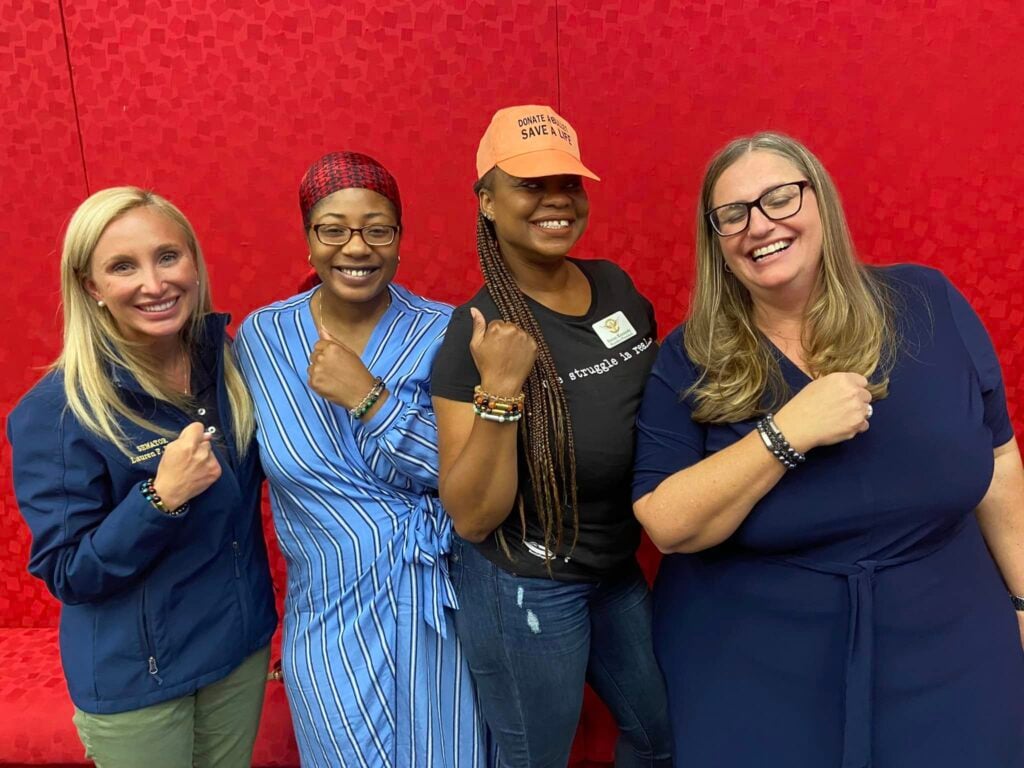
When a bullet enters someone's life — whether it strikes their body, takes someone they love, or detonates in a neighborhood they call home — the wound doesn't end when the bleeding stops. Gun violence survivors carry something that is invisible to everyone else: the weight of what happened, and the exhausting work of figuring out how to live after it.
At Bullets4Life, we were built around survivors. Our founder, Susan Kennedy, understands this journey personally. And in the years since we started turning bullets into bracelets, we've witnessed what healing can look like — not as a finish line, but as a direction. Here's what we've learned about how survivors find their way forward.
The Wounds That Don't Show Up on an X-Ray
Physical recovery from a gunshot wound is only one piece of the picture — and often the most straightforward. The deeper injuries are psychological. Research consistently shows that survivors of gun violence experience rates of PTSD comparable to combat veterans. According to the American Psychological Association, roughly 1 in 3 gun violence survivors will develop post-traumatic stress disorder. Many more experience chronic anxiety, depression, hypervigilance, and survivor's guilt that can persist for years without proper support.
These aren't signs of weakness. They're the natural human response to an unnatural event. The brain's alarm system — designed to protect us from danger — gets stuck in the "on" position. Loud noises become triggers. Public spaces feel threatening. Trust, once shattered, takes tremendous effort to rebuild.
For survivors who lost someone to gun violence, the grief compounds everything. They are mourning a person while also processing trauma, often without language for either. Many describe feeling like they're living two lives simultaneously: the one they show the world, and the one that's still stuck in the moment it happened.
"Healing isn't linear. It's not a checklist. It's choosing, every single day, to keep going — even when you don't know where you're going yet."
What the Healing Journey Actually Looks Like
There's no single path through this. But across the stories we've heard and the communities we've worked with, certain things consistently make a difference.
Community is the foundation. Isolation is one of the most dangerous outcomes after gun violence. When survivors retreat — from family, from neighbors, from anything that feels unsafe — the trauma calcifies. Connection does the opposite. Whether that's a support group, a faith community, a nonprofit, or even one trusted person who shows up consistently, human presence interrupts the spiral. Survivors who find community — especially with others who understand their experience — heal faster and more completely than those who go it alone.
Trauma-informed therapy changes lives. Not all therapy is created equal when it comes to trauma. Evidence-based approaches like EMDR (Eye Movement Desensitization and Reprocessing) and Cognitive Processing Therapy have strong track records with gun violence survivors. The challenge is access: therapy is expensive, waitlists are long, and in many communities, culturally competent trauma therapists are scarce. This is one of the most urgent gaps in the support system — and one of the reasons nonprofits and community organizations play such a critical role.
Purpose accelerates healing. This is something we see again and again at Bullets4Life. When survivors channel their pain into action — speaking at schools, volunteering with prevention programs, creating art, or simply sharing their story — something shifts. The trauma doesn't disappear, but it stops being the only thing. It becomes part of a larger narrative: one of survival, resilience, and meaning. Viktor Frankl wrote about this after surviving the Holocaust: when we can find meaning in suffering, we can bear almost anything.
- Physical movement helps regulate the nervous system — yoga, walking, and martial arts have all shown benefits for trauma survivors
- Creative expression — writing, music, visual art — gives form to experiences that resist words
- Consistent routine rebuilds a sense of safety and predictability that trauma destroys
- Advocacy work turns grief into power — many of the most effective gun violence prevention voices are survivors themselves
How Communities Can Better Support Survivors
Healing doesn't happen in isolation, and it doesn't happen only in therapists' offices. It happens in kitchens, in churches, in schools, in community centers. The people around a survivor — neighbors, teachers, coworkers, family members — play an enormous role in whether that person feels safe enough to begin healing.
If someone in your life has been affected by gun violence, the most important thing you can do is stay present. Don't disappear because you don't know what to say. Show up anyway. Ask how they're doing — and actually wait for the answer. Follow their lead on whether they want to talk about it or just have a normal conversation about something else entirely.
Avoid saying things like "everything happens for a reason" or "at least you're still here." These phrases, however well-intentioned, minimize what the person has been through. Instead, try: "I'm here. I don't need to understand everything you're feeling. I just want you to know you're not alone."
At a community level, supporting organizations that provide mental health services, crisis intervention, and survivor advocacy makes a real difference. Many survivors never access the formal mental health system — not because they don't need support, but because the path there is too hard. Community-based programs meet people where they are.
You Can Be Part of the Healing
When you support Bullets4Life, you support survivors — through community programs, school education, and advocacy that changes the conversation around gun violence. Every bracelet we make starts as a bullet. Every act of support starts with a choice to show up.
Donate TodayHealing from gun violence is hard. It takes time, support, and — more than anything — the radical belief that life after this is still worth living. We've seen it happen. We believe in it. And we'll keep doing this work for as long as survivors need someone in their corner.
If you or someone you know is struggling after experiencing gun violence, the SAMHSA National Helpline offers free, confidential support 24/7: 1-800-662-4357. The Crisis Text Line is also available — text HOME to 741741.